


Solana is rolling out some of its most significant performance upgrades as network activity reaches record levels.
The blockchain is increasing how much data applications can pack into individual transactions while also shortening the interval between successive slots, expanding both transaction capability and network responsiveness.
The upgrades come as activity across Solana accelerates, raising the operational baseline developers and validators must support as the network moves deeper into its scaling roadmap.
V1 goes live as Solana closes in on 200ms slots
On Sept. 15, Solana’s new V1 transaction format went live, increasing the amount of data a single transaction can carry by more than threefold to 4,096 bytes.
In practical terms, developers now have more room to bundle complicated actions into one transaction. Operations involving privacy technology, multiple signatures, or large amounts of account data that previously had to be broken into several steps can now be completed in a single transaction.
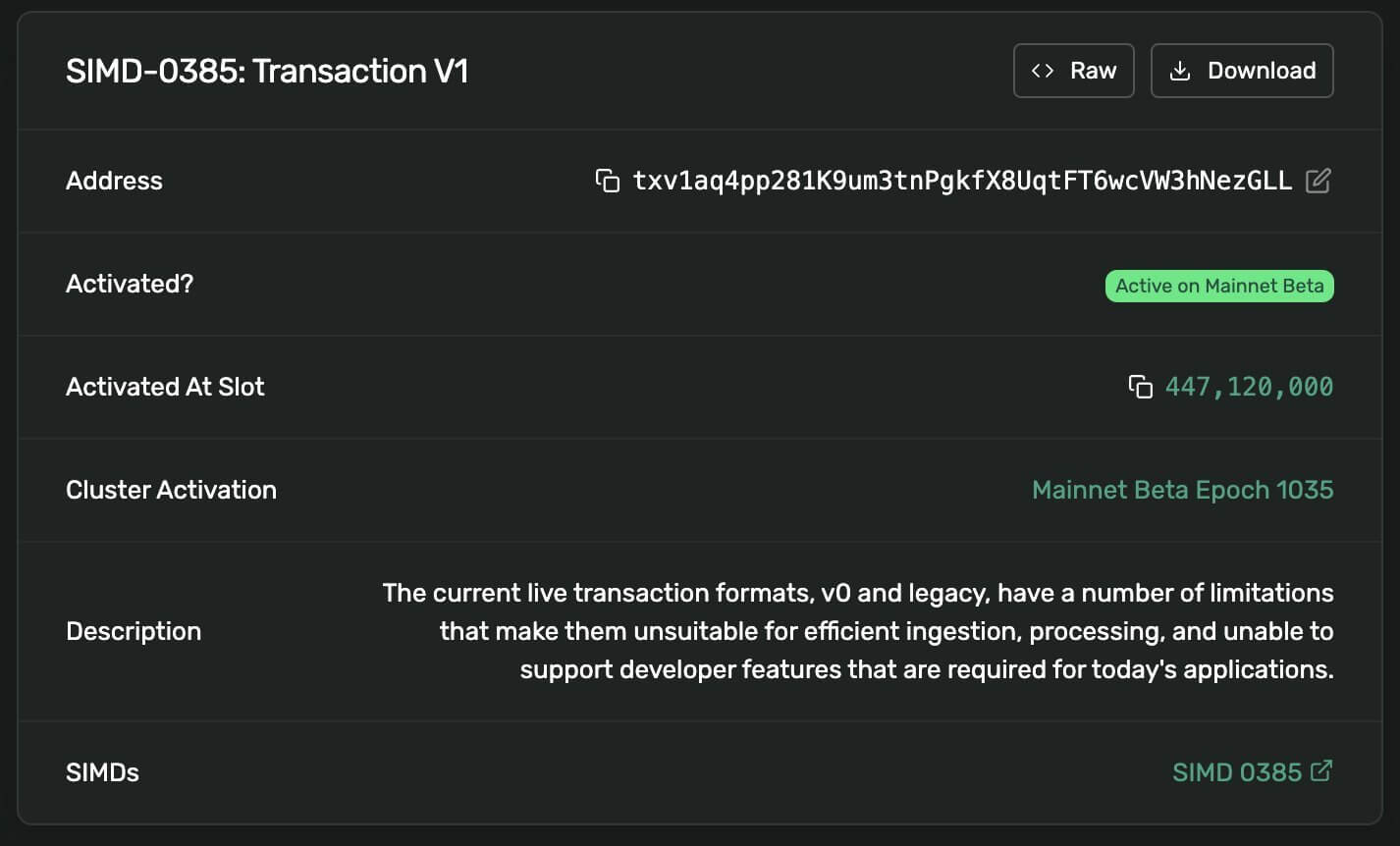
That matters because Solana transactions operate on an all-or-nothing basis. If one part fails, the entire transaction fails, reducing the risk of a multi-step operation being only partly completed.
V1 also gives developers more flexibility over how transactions are constructed. It can include up to 64 accounts directly and puts information about computing needs and transaction fees inside the transaction itself, rather than relying on separate instructions.
Older transaction formats will continue to work, so applications do not have to switch immediately. Wallets, exchanges, and other services that process Solana transactions will, however, need to make sure their systems can recognize the new format as adoption grows.
The upgrade does not automatically make transactions faster or cheaper. Instead, it lets developers do more within a single transaction, potentially making more complex applications easier to build and use.
Meanwhile, Solana is pushing ahead with another major change: reducing the time between slots, the short intervals in which the network processes and records new activity.
The network originally targeted 400 milliseconds between slots. However, that was reduced first to 350ms and then to 300ms, with the next cut to 250ms now approaching mainnet activation.
Anza, the Solana-focused R&D lab behind the Agave validator software, says the 250ms stage is progressing through its final activation process. It is expected to take effect around 05:01 UTC on Sept. 18, when epoch 1037 begins.
That would mark the third reduction from Solana’s original 400ms target and leave only the final move to 200ms under the current roadmap. The 200ms stage is already active on Solana’s development and test networks but has yet to be scheduled for mainnet.
Shorter slots are mainly designed to make Solana more responsive. At 250ms, the network would have an opportunity to produce a new slot about four times per second. At 200ms, that would rise to five times per second, twice the frequency of the original 400ms target.
The change does not automatically double Solana’s transaction capacity. As slots become shorter, the amount of work allowed within each one is adjusted as well.
The bigger challenge is whether validators can continue processing and sharing blocks reliably as the time available for each step gets progressively tighter.
Upgrades arrive as Solana activity reaches record levels
This engineering push is unfolding against the busiest period in Solana’s history.
On X, Solana stated that the network processed 5.2 billion non-vote transactions in August, surpassing July’s previous record of roughly 4.2 billion by 19%.
Non-vote transactions remove the validator voting messages required for consensus, although the remaining figure can still contain automated activity and failed transactions alongside transfers, trades and other application calls.
The record is also appearing in measures beyond transaction counts.
Solana applications generated $40.8 million in revenue last week, their highest weekly total since January. Decentralized exchanges on the network handled about $16.59 billion during the same period, extending Solana’s run as the leading blockchain by weekly DEX volume.
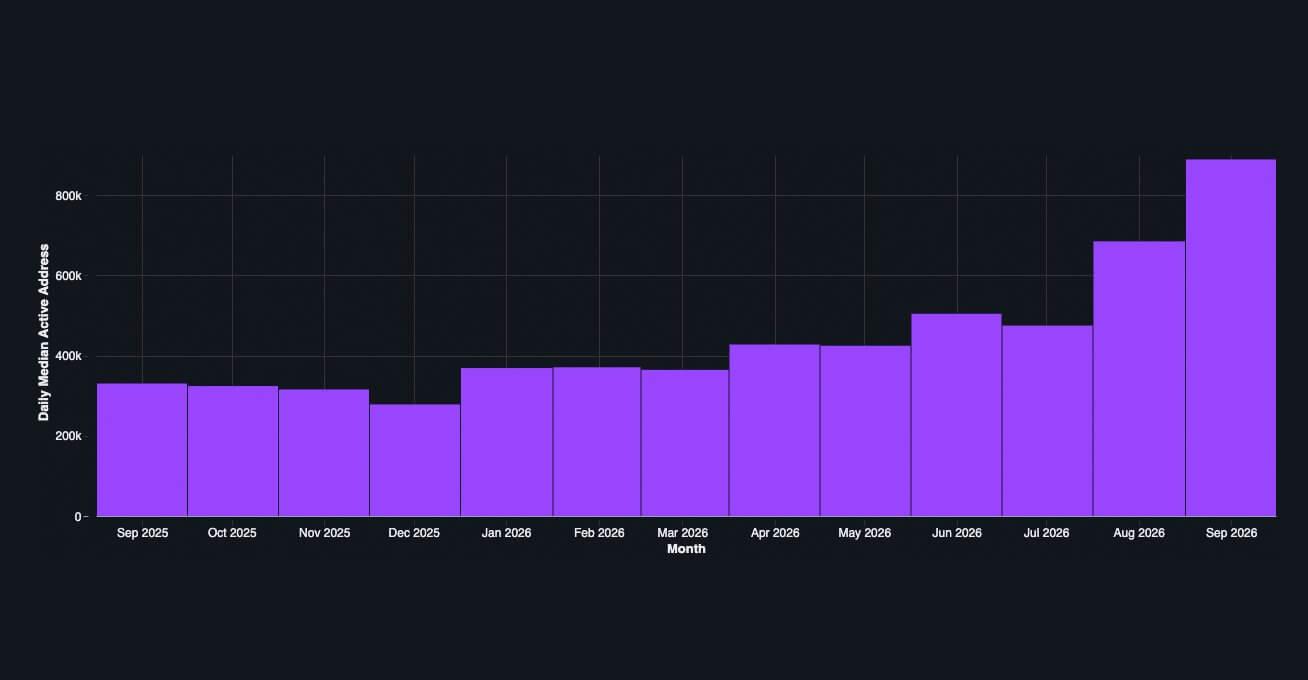
Stablecoin activity has expanded alongside trading. Daily active addresses interacting with stablecoins reached 888,000 in September, compared with 333,000 a year earlier, meaning the number has grown to roughly 2.7 times its September 2025 level.
Tokenized equities are adding another source of activity. Their supply on Solana reached a record $684 million last week after climbing 47% in three weeks.
That mix shows the record transaction count is increasingly supported by activity across different parts of the network, rather than a single application category. Trading is generating higher application revenue, stablecoins are reaching more active wallets, and tokenized equities are building a larger asset base, all while overall transaction volumes sit at historic highs.
The 250ms transition on Sept. 18 will therefore arrive with Solana already operating against a much higher level of activity than when the slot-time roadmap began.
If that step holds, developers will have only the final move to 200ms remaining in a performance push underway while network use sets records across several measures.
Credit: Source link