



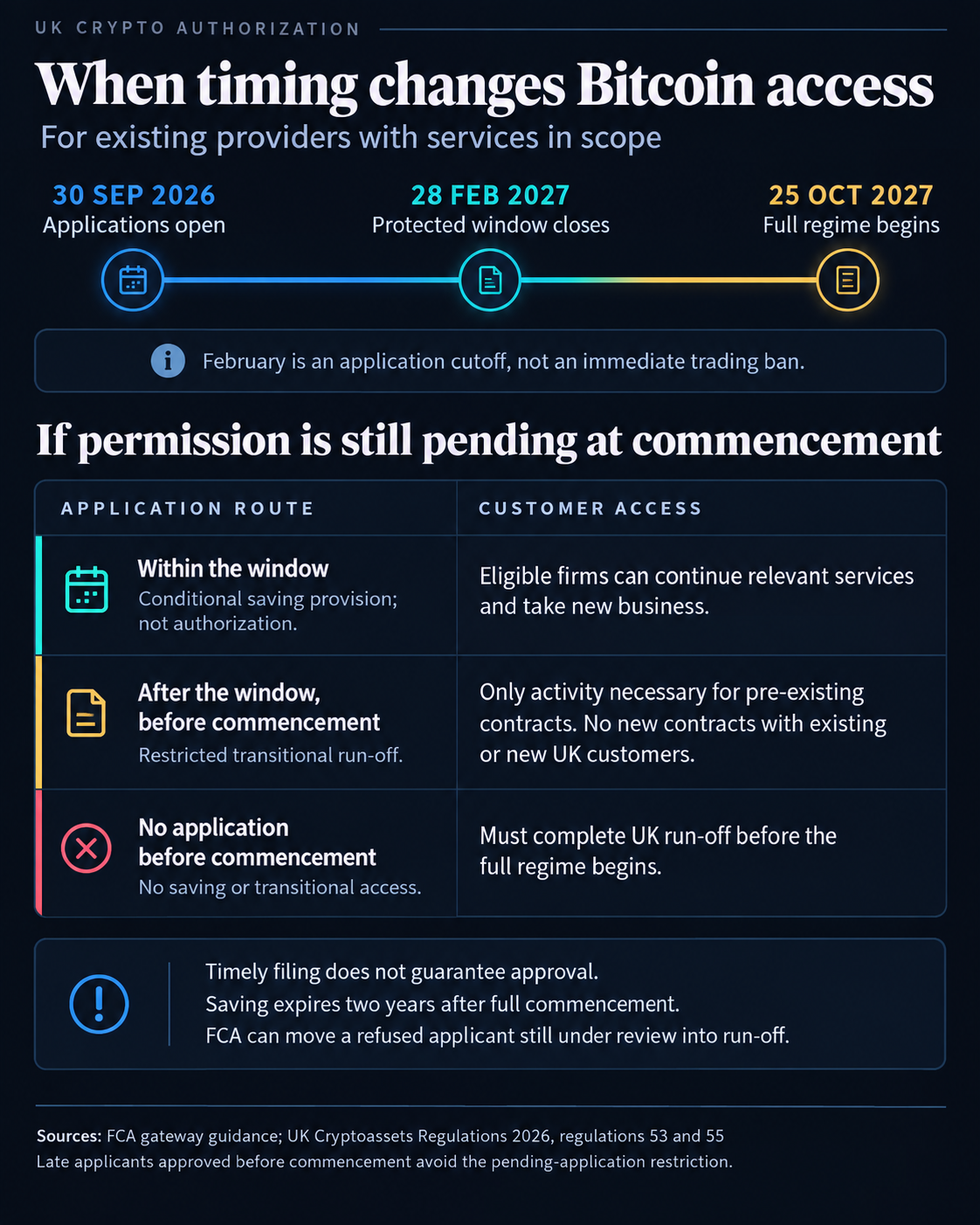
The Financial Conduct Authority opened its authorization gateway for the new UK crypto rules on Sept. 30, starting an application window that can protect existing Bitcoin providers’ ability to keep serving UK customers and take new business if approval is still pending when the full regime begins.
The window closes Feb. 28, 2027. The full regime starts Oct. 25, 2027, according to the FCA’s announcement. February is the deadline for qualifying for the saving provision, a temporary protection for pending applicants, rather than a date when Bitcoin services must immediately stop.
For eligible existing firms applying within the window, an undecided application at commencement can allow the relevant services to continue, including new business. The protection covers the activities in the application, so it does not amount to unrestricted permission for every service a platform offers.
The statutory protection is bounded: the saving chapter expires two years after full commencement, and submitting an application does not guarantee authorization.
The protection can also cover a refusal still open to review. But the FCA can direct such a firm into restricted run-off when necessary for criminal enforcement, consumer protection or its objectives.
UK crypto rules change customer access for late applicants
Platforms can still apply after February. But a late applicant that files before commencement and is still awaiting a decision on Oct. 25, 2027 enters the transitional provision while its application is assessed, according to the gateway rules. A late applicant authorized before commencement avoids that pending-application restriction.
That route permits newly regulated activities only as necessary to perform contracts entered into before the firm entered transition. It prohibits new contracts with both existing UK customers and new UK customers. Having an account already does not, by itself, preserve access to new business.
The run-off arrangements last a maximum of two years. Firms must notify the FCA and existing contract parties. Customer notices must explain the lack of relevant authorization and whether asset protection, dispute resolution or compensation arrangements have materially changed.
A firm with business within scope that does not apply before commencement must complete its UK run-off beforehand. An application rejected for missing minimum information counts as no application unless a valid one is subsequently submitted.
For Bitcoin providers, the relevant activities include trading platforms, dealing and arranging transactions, and custody. Overseas firms serving UK consumers can also fall within scope, although the territorial rules include specific intermediary and custody exceptions.
Existing anti-money-laundering registration does not automatically convert into authorization under the new regime. Firms already authorized under the Financial Services and Markets Act for other activities must vary their permissions if they intend to undertake the new crypto activities.
An existing registration therefore does not settle whether a provider will hold the required permission, qualify for pending-application protection or be restricted to run-off when October 2027 arrives.
Credit: Source link
